From Zero to Thousands: Growing Your Email List

By Nitesh Patel and Kelsey Lewis

Facebook
X
WhatsApp
Email

Used well, email gives you a direct line to people who’ve actively chosen to hear from you. There’s no social media algorithm deciding who sees your message, and no platform constantly changing the rules. It’s just you and your audience, which is why email remains one of the most valuable outreach tools in politics. It’s cheaper than paid ads, more reliable than social media, and far better at sustaining engagement over time.

At its core, political communication is about attention and action. One of the most valuable actions a supporter or constituent can take is sharing their email address. It creates a direct line of communication that underpins everything else: inviting people to volunteer, keeping them informed ahead of elections, and building momentum over time through regular, recognisable contact.

That’s why every interaction matters. Every petition signed, survey completed, or update read is another touchpoint, and another opportunity to build a direct line to people who care enough to listen. Think of email like beans on toast. It’s not flashy or trendy, but it’s consistently effective.

📈 Case Study: Jon Pearce MP, High Peak

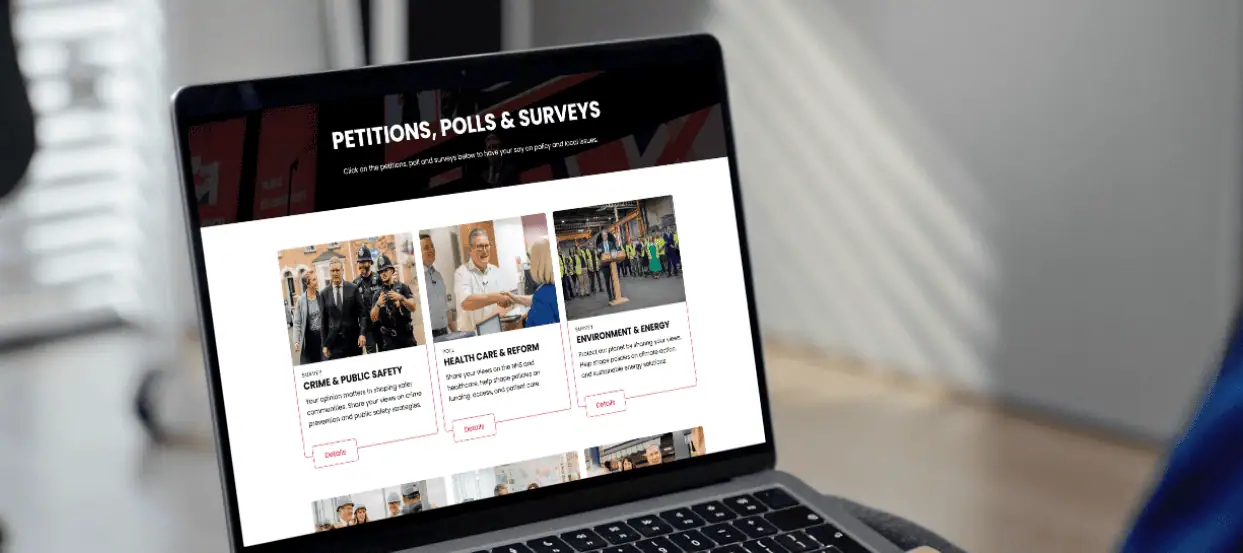
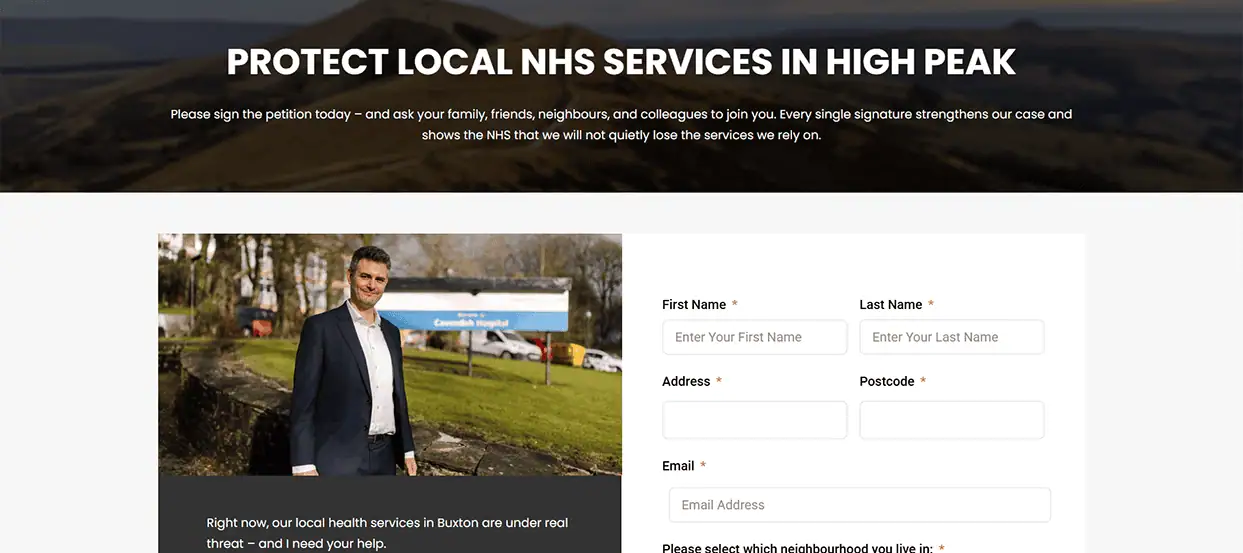
When Jon Pearce was elected MP for High Peak in 2024, he built outreach and communication channels from the ground up. Instead of only a standalone “sign up to my newsletter” appeal on his website (important as that still is), he implemented a multi-faceted approach, focusing on the issues people in High Peak care about. Throughout 2025, he launched a series of targeted surveys and petitions, promoted organically on social media and collected and managed through our digital platforms.

These included topics on protecting the NHS’s local services, which received over 1,000 responses; a petition to “Help me save Glossop Tip”, a local recycling centre, which attracted more than 1,500 responses; and a survey on local government reorganisation, with over 700 responses.

Crucially, each survey and petition included a simple, optional tick box inviting respondents to receive Jon’s regular email newsletter for updates on the issue. It wasn’t a pushy sale, but a clear offer for constituents to stay informed. The result was a contact list of over 6,000 people built in a single year, with more than 1,200 now subscribed to Jon’s email newsletter.

The lesson is straightforward. Surveys and petitions work because they do two things at once. They give MPs (or any elected member!) meaningful insight into constituent priorities, and they create an easy pathway for people to stay involved beyond a single interaction. Outreach shouldn’t just be about harvesting emails. The strongest campaigns design actions that deliver complementary outcomes: real engagement on issues people care about, and the ability to keep that conversation going.
Setting Up Email Infrastructure

Email works best when it’s treated as a system, not a megaphone you switch on only when you need something. Good email infrastructure means:

  • A list that exists. You can’t email people if you haven’t collected their details.
  • A system that’s simple. If adding new contacts requires three logins and a spreadsheet, it won’t happen consistently.
  • A platform that fits your goals. It should be user-friendly and scale affordably as your list grows and integrate with the tools you already use.
  • Consistency. If people only hear from you once or twice a year, they’ll forget who you are.

Once that foundation is in place, the goal is sustainability. The best email programmes save time, reduce friction, and make it easy to keep communicating without reinventing the wheel every week.

Saving Time with Templates and Automation

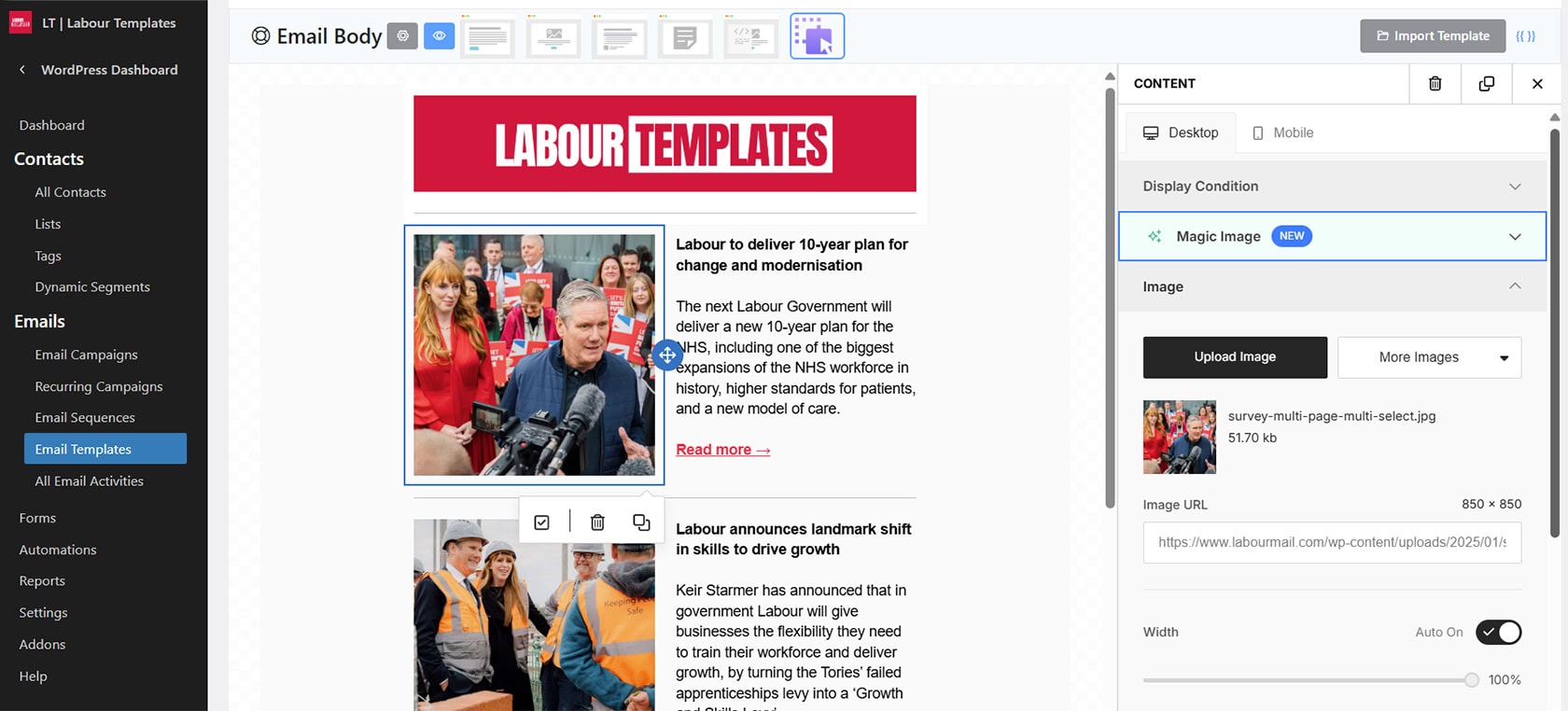
Templates and automation are what turn email from a burden into a habit. A small library of templates will cover most political communication needs, including:

  • Follow-ups after events, canvassing, surveys, or petitions
  • A regular newsletter with consistent sections and branding
  • Thank-you emails for people who take action
  • Welcome emails for new subscribers
  • Event reminders and key campaign moments (like GOTV)

These don’t need to be perfect, they just need to be reusable and easy to customise quickly. Automation takes this one step further. Welcome emails should send automatically when someone joins your list. Thank-yous, reminders, and follow-ups can trigger based on actions people take. Reducing manual work doesn’t just save time; it makes your operation more resilient when things get busy.

Collecting Email Addresses

Building a list is about giving voters clear reasons to sign up, and using multiple, complementary ways to capture interest. In practice, that means thinking about email collection in two broad categories: online and offline. Online actions like surveys, petitions, and campaign pages make it easy for people to opt in in the moment. Offline activity from coffee mornings to street stalls still plays a vital role, but should always be designed with digital follow-up in mind. Even when engagement happens face to face, the goal is the same: to capture details digitally, record consent clearly, and create a pathway into ongoing email communication.

🚨 Important note on UK GDPR: when someone gives you their details for a specific purpose, signing a petition, attending an event, responding to a survey, they’re only consenting to communication about that activity. To add them to regular updates or a newsletter, you must include a separate, unticked opt-in checkbox that clearly explains what they’re signing up for. Never assume consent, and never use pre-ticked boxes. This applies online and offline.

Online Collection

Online channels are often the easiest place to start building your list because it meets people where their attention already is. When someone clicks, signs, or responds, the step into email communication can happen naturally and immediately.
  • Website Sign-Up Forms: Your website should make joining your email list easy from anywhere, not just the homepage. Many visitors arrive via social media links to blog posts, policy pages, or issue updates. Make sure sign-up options appear in your header and footer site-wide, and use inline or sidebar forms or pop-ups where people are already engaged with your content.

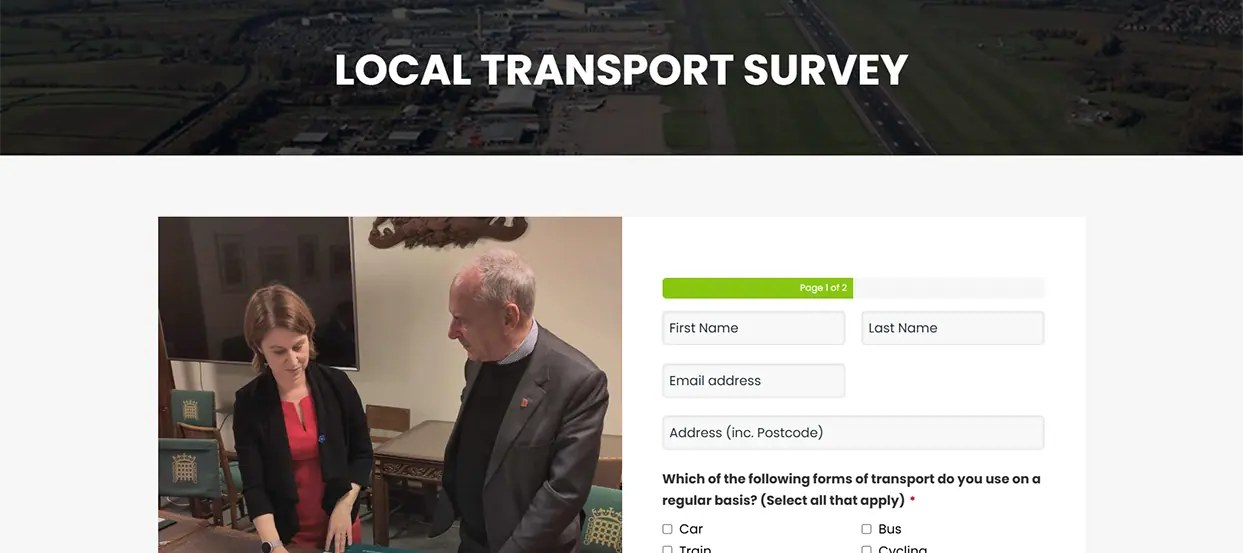
  • Polls, Petitions & Surveys: These are some of the most effective list-building tools because they give people a reason to engage. Someone signing a petition or completing a survey is already signalling interest in a specific issue. That moment is the right time to offer ongoing updates (with a clear, optional opt-in) so the relationship doesn’t end once the form is submitted. Crucially, the follow-up email about the petition or survey creates an additional opportunity to present the newsletter sign-up to people who didn’t tick the box on the form. Unlike a small checkbox, an email can include a clearer, more visual sign-up section that explains the value of subscribing and makes the choice feel more intentional.
  • Paid Ads That Go Somewhere Useful: Paid ads should always have a clear next step. Rather than driving people to generic pages, link ads to petitions, surveys, or sign-up forms that capture contact details. Use exclusion lists so you’re not paying to reach people already on your list, and test lookalike audiences to find voters similar to existing supporters. Awareness is fleeting; contact details let you follow up.

  • Social Media Integration: Social platforms are good for reach, but poor for retention. Make it easy for followers to move from social media to email by embedding newsletter sign-up forms in profiles and bio links. Regularly remind people why your emails are worth reading. For example, early notice of events, deeper explanations of local issues, or updates they won’t see on social media feeds.

Offline Collection (But Still Think Digitally)

Face-to-face interactions remain some of the strongest opportunities to grow your list, but only if data is captured cleanly and followed up on quickly. Paper sign-up sheets slow this down, introduce errors, and often mean contacts never hear from you again.
  • Campaign/Constituency Events: Every coffee morning, community meeting, or candidate forum is a chance to grow your list. Every event should have a clear sign-in process, even informal ones. Using a tablet or laptop with a simple digital form allows attendees to enter their own details, includes a clear, optional newsletter opt-in, records consent, and feeds everything straight into your CRM. Attendees can be automatically tagged as having attended that specific event, which makes follow-up easy and relevant. A same-day or next-day thank-you email closes the loop while the interaction is still fresh, and creates another opportunity for people to opt in to regular updates if they didn’t do so at the event itself.

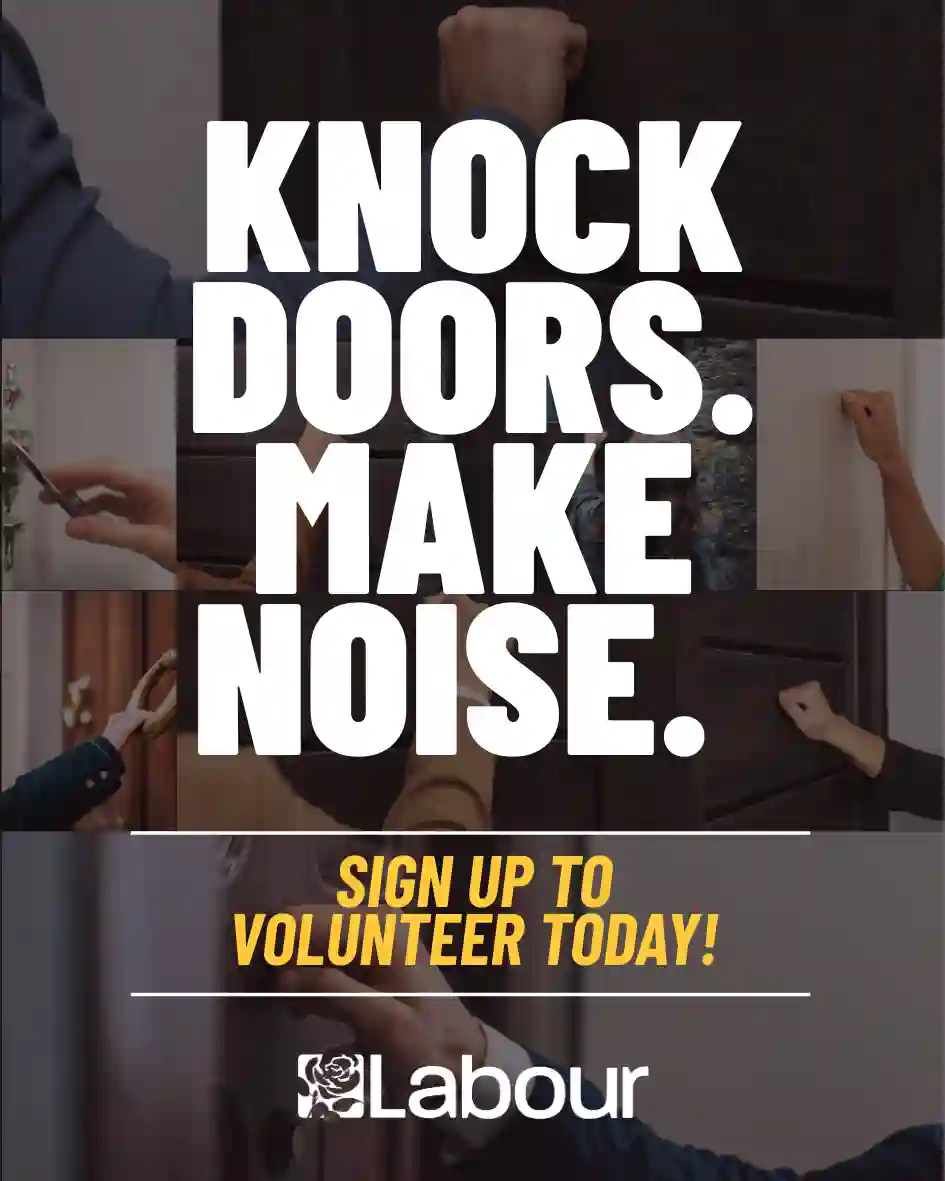
  • Door-to-Door Canvassing: Canvassing remains one of the most effective ways to collect email addresses, particularly from people who aren’t already politically engaged online. Where possible, canvassers should use phones or tablets connected directly to your CRM. When someone says ‘yes’ to receiving emails, their details are recorded immediately, tagged to that doorstep interaction, and ready for follow-up. This removes the need for manual data entry at the end of the day, reduces errors, and ensures people hear from you quickly, when they’re most likely to remember the conversation. It also allows you to tailor follow-up based on what you learned at the door, rather than sending a generic first email. Clarity matters here. Canvassers should be explicit about what people are signing up for, how often they’ll hear from you, and what kind of content they can expect. Clear consent builds trust and improves long-term engagement.

✍️ Tip: Having pre-written scripts for canvassers ensures your canvassers cover all the legal necessities when asking about email opt-ins.

You've Got the Emails. Now What?

Elected Member Newsletters

As an elected member, your goal is reach, not persuasion. You want as many people in your constituency as possible receiving your updates. You’re talking about local issues, casework wins, services, community events, and day-to-day work that affects people’s lives.

It shouldn’t matter whether someone voted for you or not. Your newsletter should be a non-partisan channel that keeps residents informed and builds trust over time. Making sure people actually open and read your emails matters just as much as what you write, so focus on clear subject lines, consistent send schedules, and building the habit of engagement with your constituents.

Campaign Emails

Campaign emails have a different job. They’re more direct and more action-focused: volunteering, attending events, sharing messages, and turning out on polling day. The biggest mistake campaigns make is treating email as a series of one-off broadcasts. Effective campaign email works as a sequence. You warm people up, explain why an ask matters, and make it easy to act when the moment comes.

That also means not sending every email to everyone. Use segmentation to tailor messages based on what you know. Supporters can be asked to help. Undecided voters need persuasion and reassurance. People who lean Labour but haven’t committed yet need reasons to take that final step.

Support for Campaigns

If you’ve made it this far, you understand why email matters for offices and campaigns. The difference between a growing email programme and a stagnant one is having the right infrastructure in place from the start.

Labour Mail is our all-in-one email platform built specifically for Labour politicians and campaign teams. Unlike most email tools designed for commercial marketing, it’s built for political work by people who’ve run campaigns, with an understanding of election cycles, list churn, and limited time and resources. It integrates directly with your wider campaign infrastructure, so emails collected online, at events, or on the doorstep all land in one place. Pricing scales with list size, and the platform is eligible for use with IPSA funding.

And we don’t just provide the platform. We can support with strategy too, from drafting emails and designing templates, to setting up systems so you can hit the ground running. We’ve helped teams grow their lists by thousands using the approaches outlined here. If you’re serious about building sustainable email infrastructure, we’re here to help.

About the Authors

Nitesh Patel has built digital tools for Labour politicians since 2008, supporting councillors, MPs, Welsh MSs and first-time candidates across the UK. He combines technical expertise with grassroots organising experience to create fast, practical campaign websites that help candidates connect with voters and compete effectively.

Kelsey Lewis has worked at the intersection of democracy and design across the UK and internationally, supporting governments and civil society on complex political issues. She brings that experience to Labour campaigns, creating clear, confident brands and campaign assets that help candidates communicate their values and connect with voters.
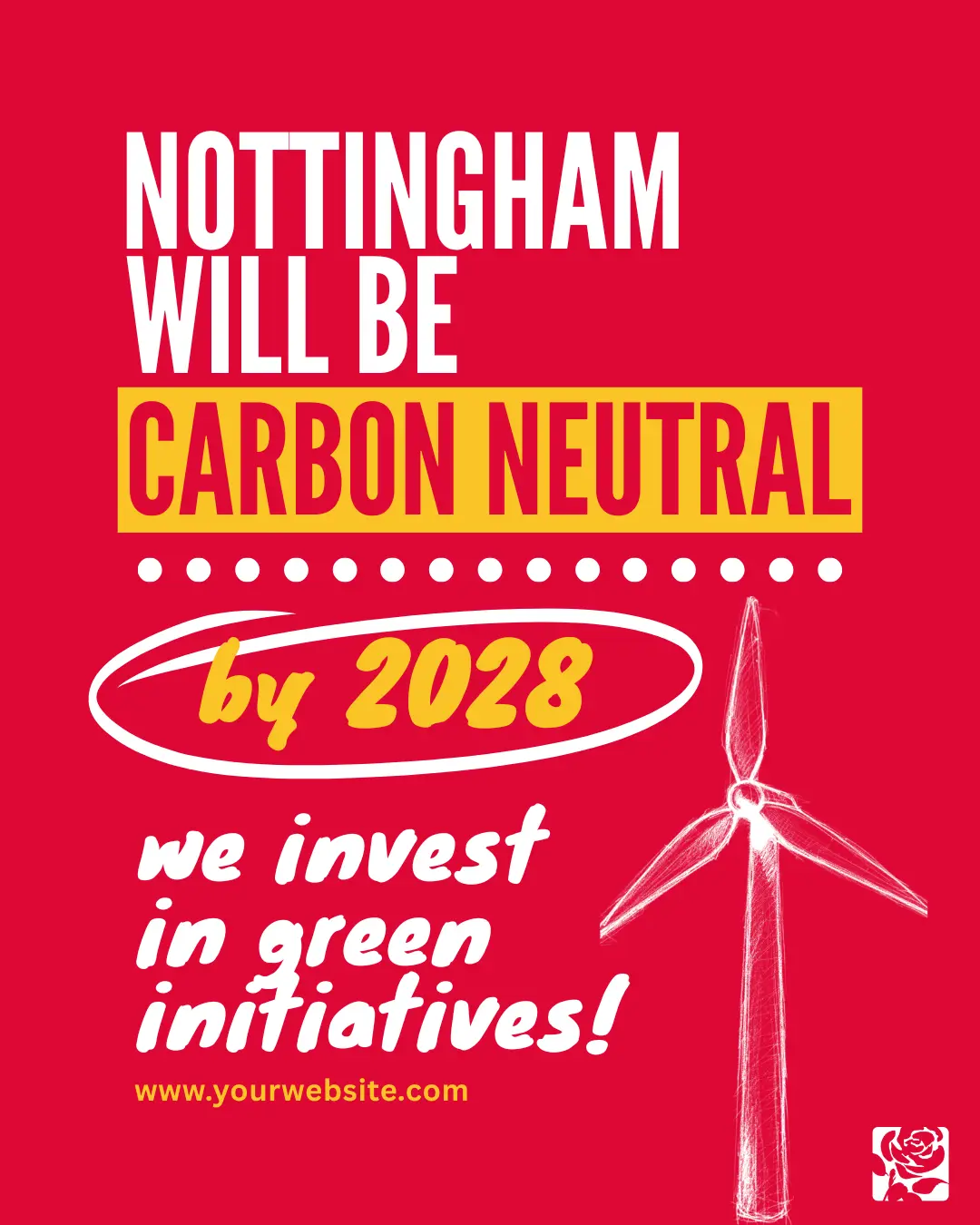

 500+  Graphics Templates

Used by 2,000+ Labour members and groups nationally, get instant access to 500+ graphic templates that convert voters into supporters.

 Trusted  By Campaigns

Join Labour members and groups using Labour Mail to keep voters informed, grow support, and run stronger campaigns.
Need help reaching voters by email?
Book Meeting
Let's Chat
Need help reaching voters by email?
Join Labour MPs, councillors and groups using Labour Mail to keep voters informed, grow support, and run stronger campaigns.
Book Meeting