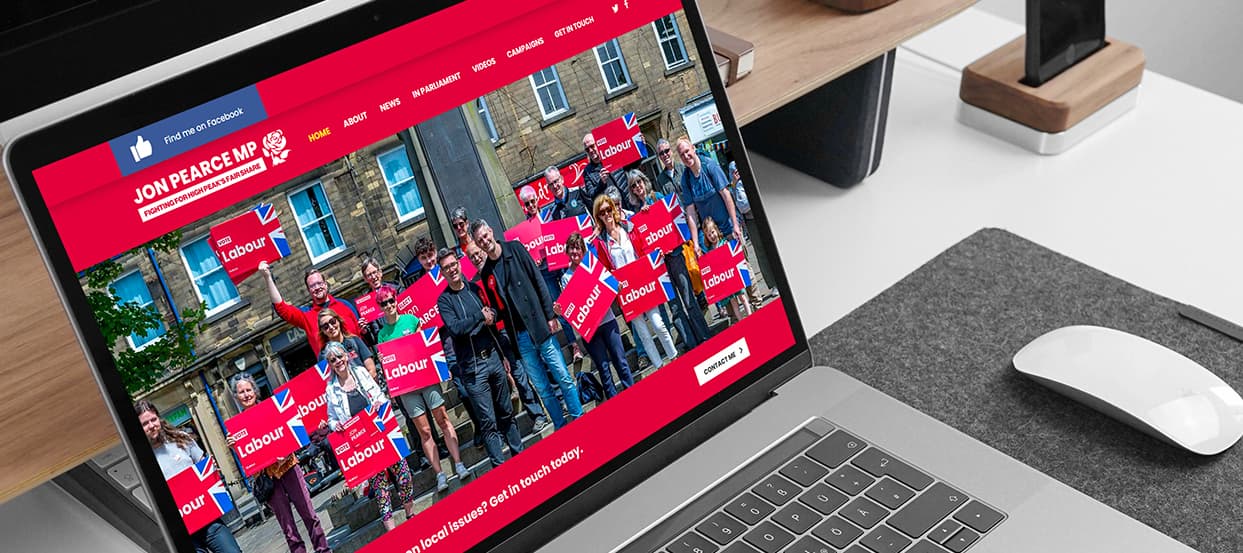
A great website is the foundation of your campaign. Think of it as your digital headquarters: it’s where everything lives, and where voters can easily find what they need. To get the most out of your website, you need to treat it as an organising tool, not a brochure. It should be engaging and active, not passive or outdated.
With the May 2026 local elections approaching, your campaign website will play a decisive role in how visible, credible, and organised your campaign is. Used well, it helps you cut through crowded fields, get your message in front of voters, and build a ground game that wins elections. A good campaign site does multiple things: it recruits volunteers, identifies supporters, gathers local issues, and moves voters closer to action. If nothing happens after someone clicks, that’s a missed organising moment and a lost opportunity to build momentum.
This article sets out 10 practical ways to maximise your website and turn it from a passive profile into an action-driven asset that helps your Labour campaign reach more voters.
1. Make Key Actions Available Everywhere
Your most important calls to action shouldn’t be buried three clicks deep on a “Get Involved” page. They should be easy to find and available wherever someone is on your site. The goal is simple: make taking action as frictionless as possible. There are two main ways to keep actions visible and accessible: permanent placement and strategic popups.
Permanent placement of key buttons and links: What you include will vary by campaign and goals, but most sites should feature donate buttons, email sign-up forms, volunteer sign-up links, and social media links. These should live in your header or footer so they appear on every page.
Use popups strategically: Popups work when they’re used deliberately, because they create a clear decision point. Without one, voters often browse passively and leave. With one, they have to actively choose whether to engage with your ask. Even a “no” is better than passive abandonment, because you’ve prompted consideration. Don’t overuse them, but don’t let engaged constituents leave without giving them a chance to act.
Exit-intent popups: Trigger a lightweight popup with one clear ask when someone is about to leave without taking action.
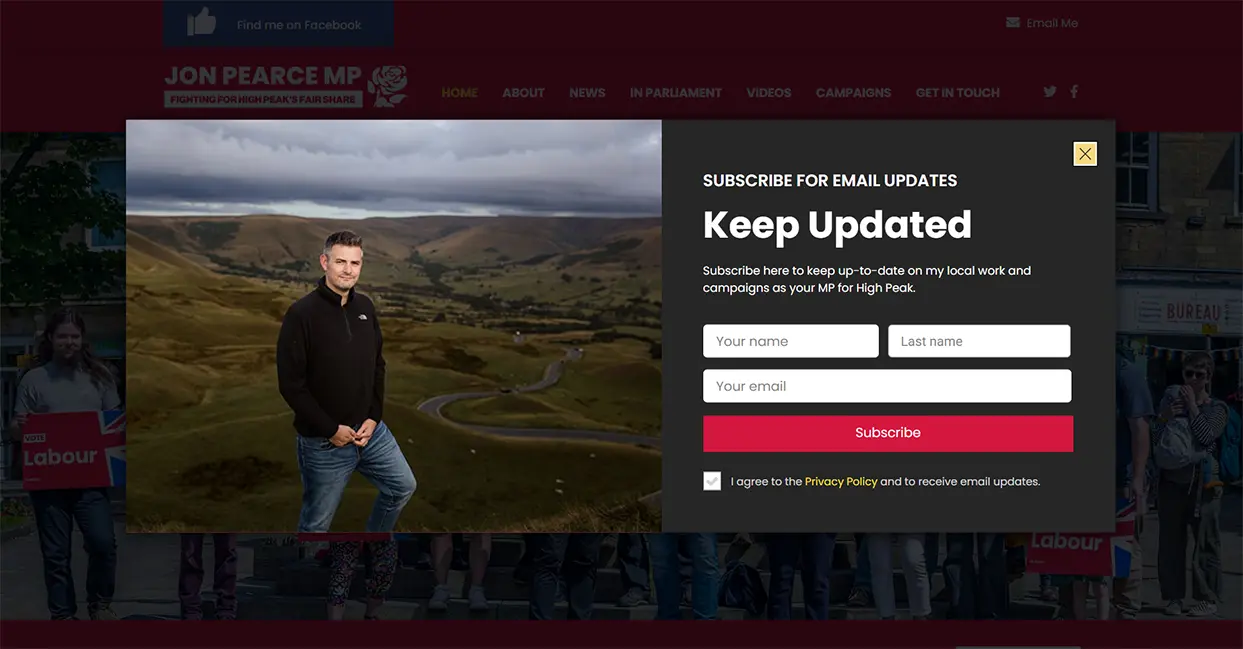
Timed popups: After 30–60 seconds on your site, visitors are usually engaged enough for a quick prompt.
Scroll-triggered popups: If someone scrolls halfway down a page, they’re clearly interested. This is a good moment to ask.
John Pearce MP using a timed popup.
2. Connect Your Signup Forms Directly to a CRM
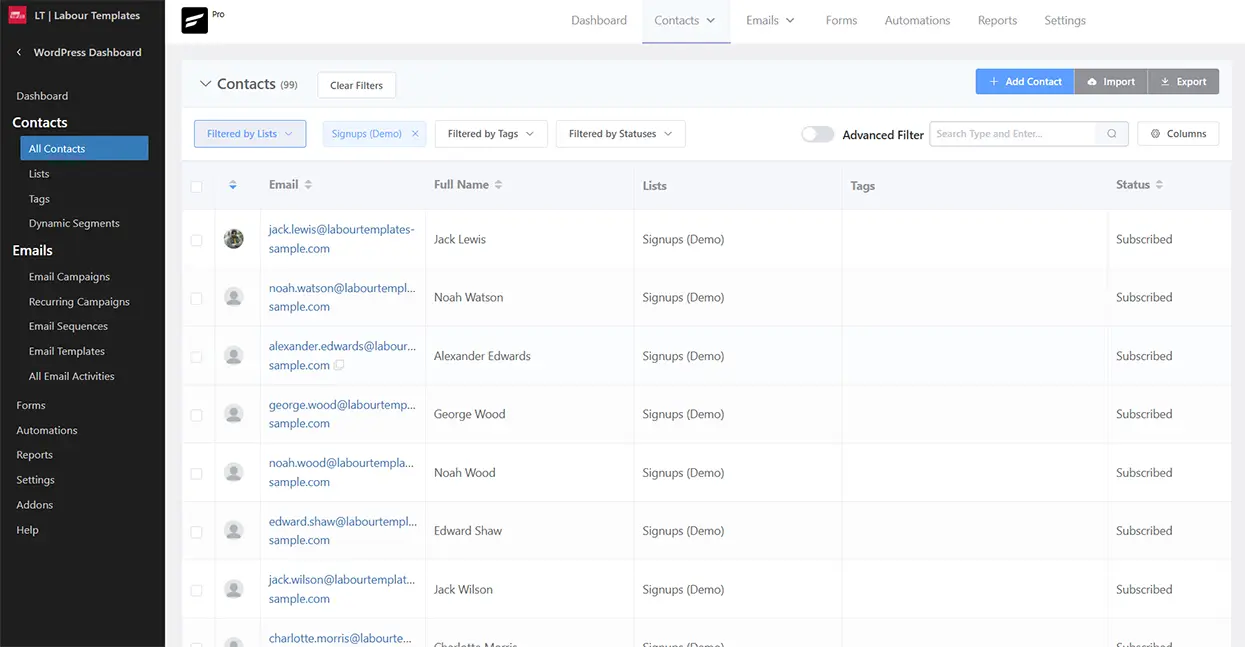
If your website forms aren’t pushing data straight into your Customer Relationship Management (CRM), you’re creating unnecessary work, duplicating effort, and missing opportunities to follow up effectively. This isn’t just about organisation, it’s about having follow-up that actually works. When you can segment supporters based on how they engaged and what they care about, you can tailor outreach that speaks to their priorities. That’s far more effective than sending the same generic message to everyone, and it’s essential for building momentum as elections approach. Every signup should flow automatically into your database.
A CRM used to manage contacts and outreach.
Every form should feed into one central system: Whether it’s volunteer signups, petition responses, issue surveys, or newsletter subscriptions, all data should land in the same CRM with clear, consistent tagging. Ideally, all campaign data lives in one place (though how to get there is a topic for another week). A volunteer signup should be marked differently from a general email subscriber. Someone who completes a housing survey should be tagged separately from someone asking about healthcare.
3. Make It Accessible to Everyone
Accessibility starts with understanding who lives in your constituency and how they access information. Different communities have different language needs, devices, and barriers to participation, and your website should reflect that. A site for a candidate in Birmingham will need to meet different accessibility needs than one in Carmarthenshire or the Scottish Highlands.
Mobile-first design is non-negotiable: Mobile devices account for more than 60% of global website traffic, and for many voters a phone is their primary way of accessing your campaign. Design and test everything on a phone first. Forms should be easy to complete, buttons easy to tap, and key actions simple to find on a small screen. If your site does not work well on mobile, you risk losing engagement from large numbers of voters.
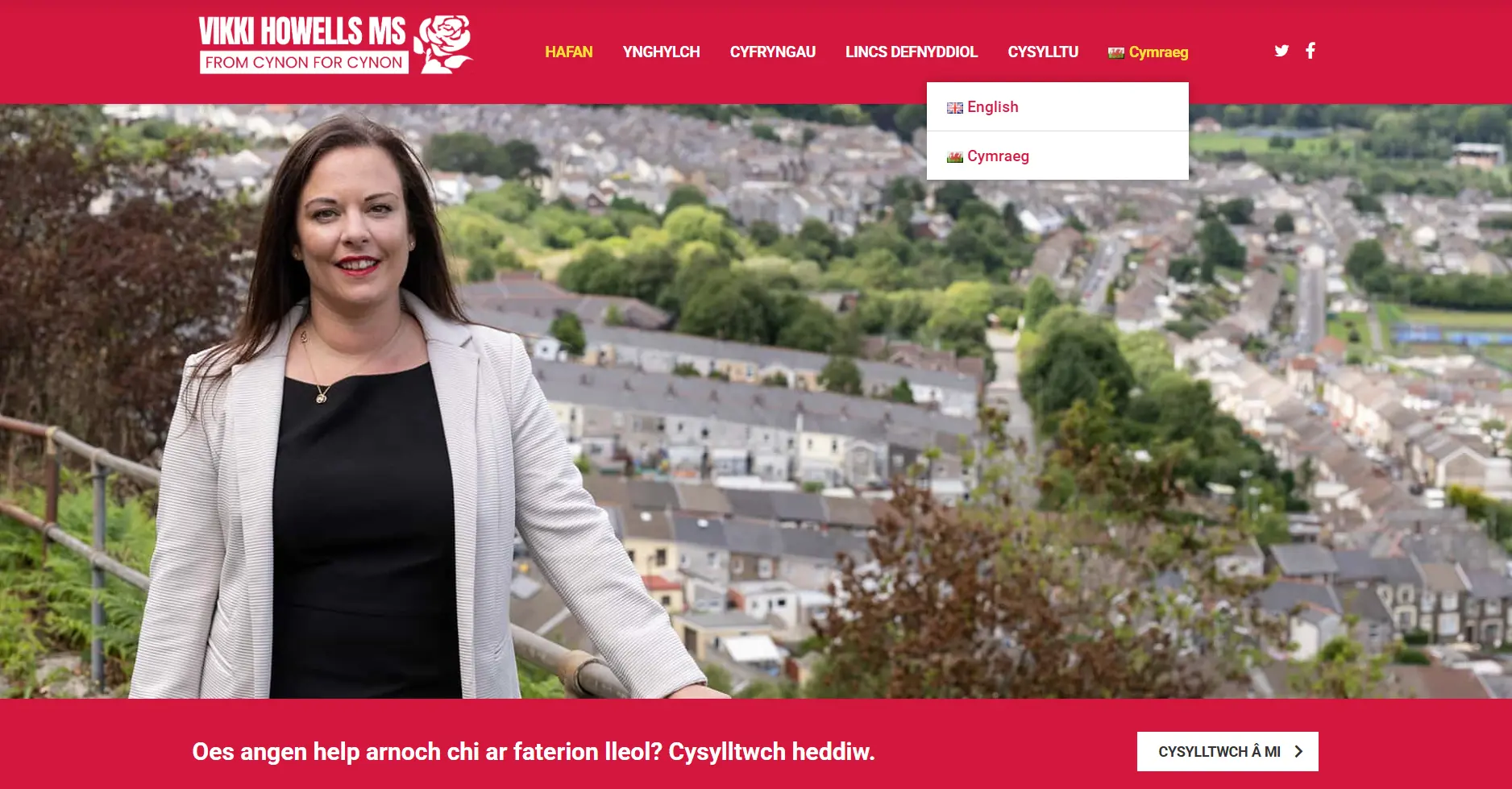
Multilingual when relevant: If your constituency includes significant non-English-speaking communities, build translation into your site from the start, not as an afterthought. Depending on where you’re standing, this might mean Welsh, Scots, Scottish Gaelic, Polish, Hindi, or Urdu. It’s a practical step that also signals you’re campaigning for everyone.
Vikki Howells MS integrating Welsh into her site.
Basic accessibility features matter: Alt text for images, readable fonts, strong colour contrast, keyboard navigation, and captions or transcripts for videos are basic requirements for reaching everyone in your community. Paying attention to these details helps ensure voters are not excluded simply because of how they access information.
4. Lead with a Clear, Consistent Message
Your website shows voters what matters most to you, and for many people it will be their first interaction with your campaign. Most visitors will make a snap judgement within seconds, so it needs to be immediately clear what you stand for and why you are asking for their support. Clarity and consistency are what turn a brief visit into recognition, trust, and engagement.
One clear message on your homepage: Your homepage should answer the question “why should I care?” in a single sentence before anything else. Not your biography, not your CV, and not a long list of policies. Just the reason you are running, in plain language.
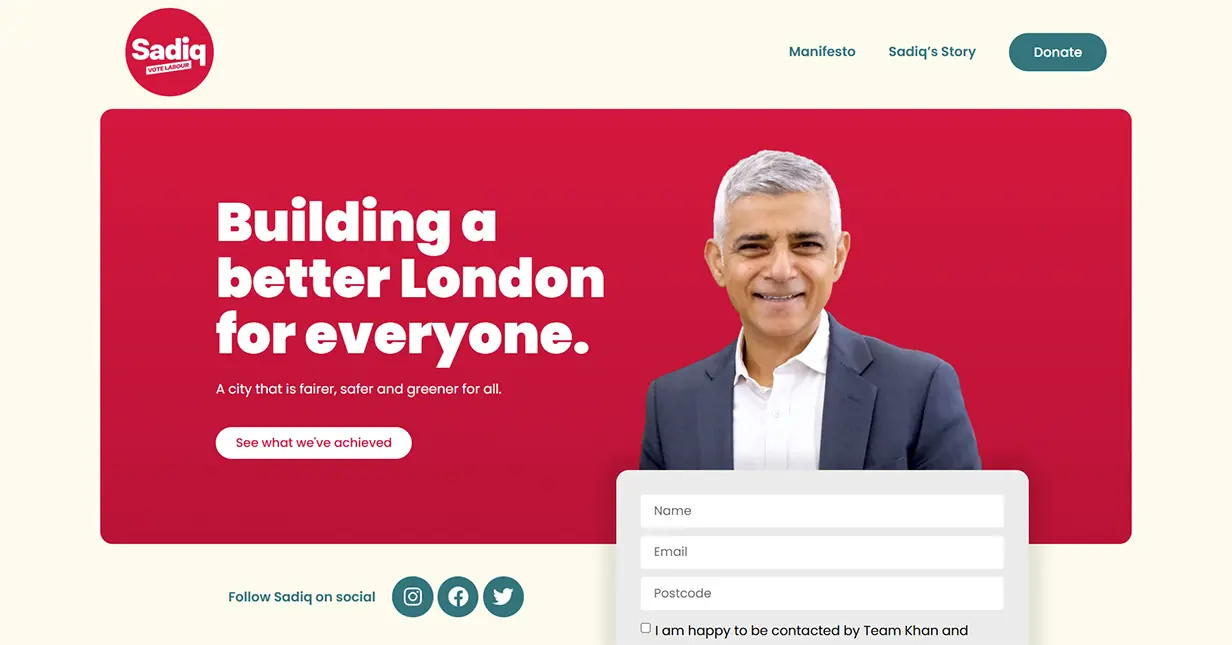
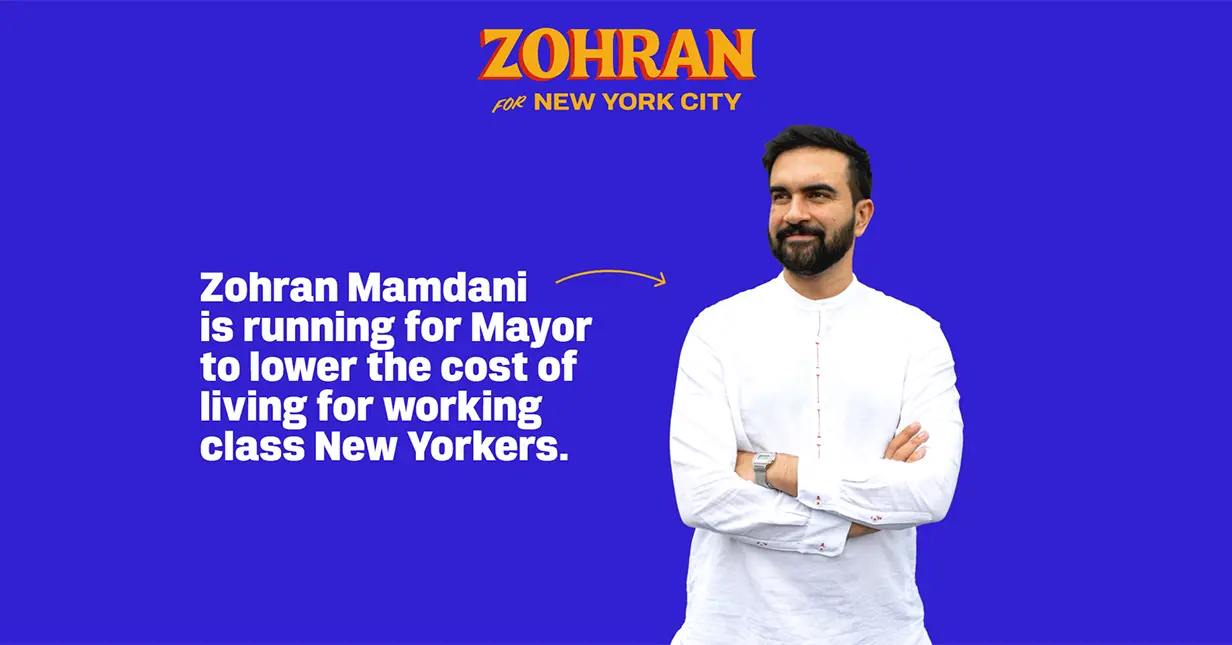
Example: Zohran Mamdani’s mayoral campaign website in New York City led with a single, clear statement of purpose about lowering the cost of living for working people. Sadiq Khan’s London mayoral site does the same, setting out a simple, values-led message before asking visitors to explore further. In both cases, voters understand the point of the campaign within seconds. Everything else on the site builds from that foundation.
Sadiq Khan's homepage.
Zohran Mamdani's homepage.
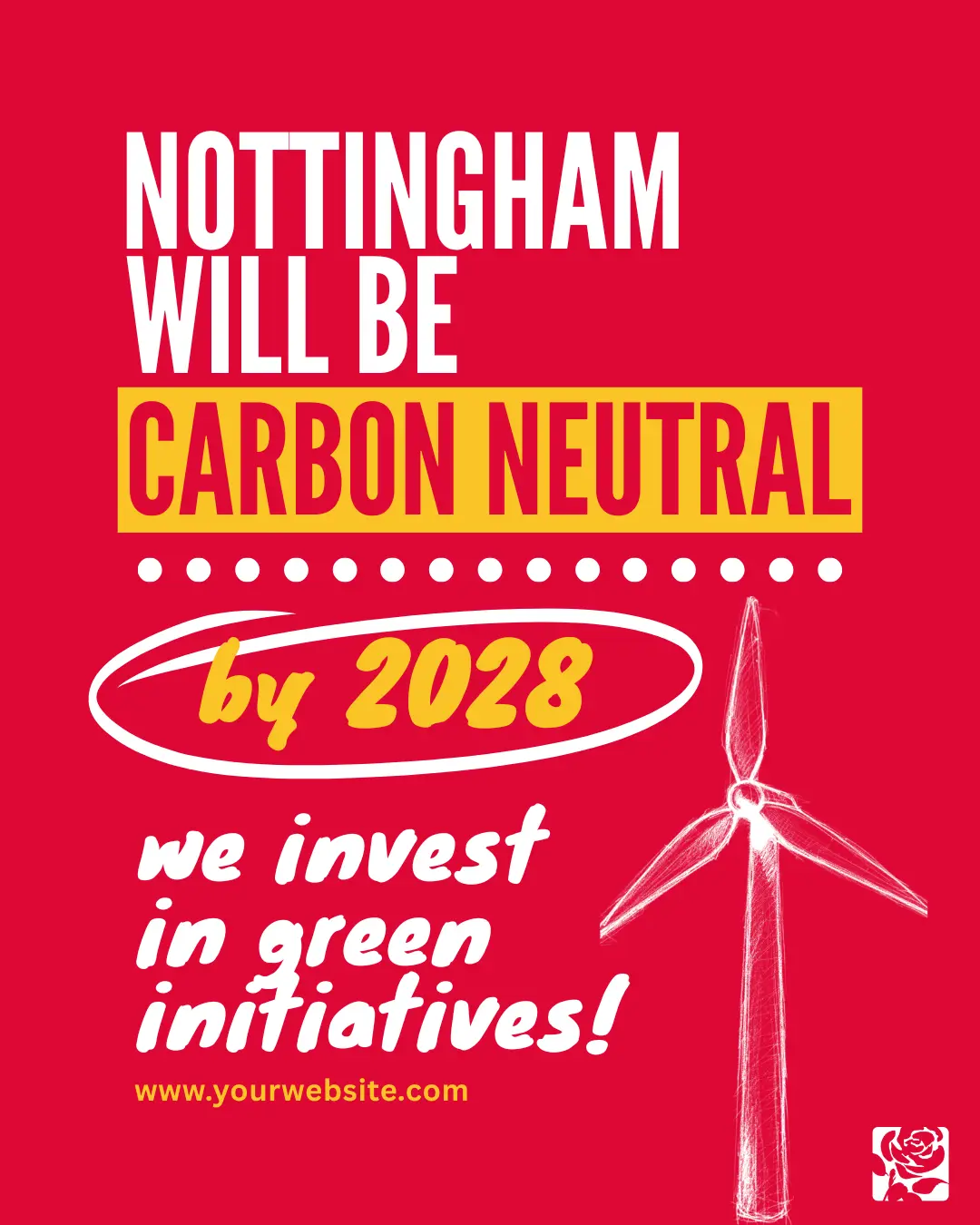
Consistent branding everywhere: Your website should visually match your leaflets, emails, social media graphics, and printed materials. Consistent colours, fonts, and tone help people recognise your campaign instantly and build trust over time. This consistency should sit within the wider Labour family, reflecting the regional approaches used by Welsh Labour, Scottish Labour, and the UK Labour Party, while still being adapted to the demographics and electoral context of your constituency or ward.
Clear, simple navigation: Voters should be able to find what they need within a few seconds. Pages like About, Issues, Get Involved, and Donate are usually enough. Avoid cluttered menus, unnecessary dropdowns, or hiding key actions behind multiple clicks. If someone wants to volunteer or donate, it should be obvious how to do that immediately.
5. Use Your Website to Generate Leads
Your website should be constantly turning anonymous visitors into known contacts. Every page is an opportunity to identify supporters, capture their details, and create a permission-based channel for future contact. Lead generation is about meeting people where they are and lowering the barrier to first contact. Not everyone who visits your site is ready to volunteer or campaign with you, but many are willing to leave their details if the ask is clear and relevant. Each signup is the beginning of a relationship, not the end of it.
Build clear lead capture opportunities: A strong campaign website offers multiple, low-friction ways for people to share their details. Each of these captures contact information and signals interest, even if the person is not ready to take further action yet. Common lead capture tools include:
Email newsletter signups
Petition signups on local issues
Short surveys about local priorities
SMS opt-ins for campaign updates
Event RSVPs
Postal vote request forms
Requests for yard or window signs
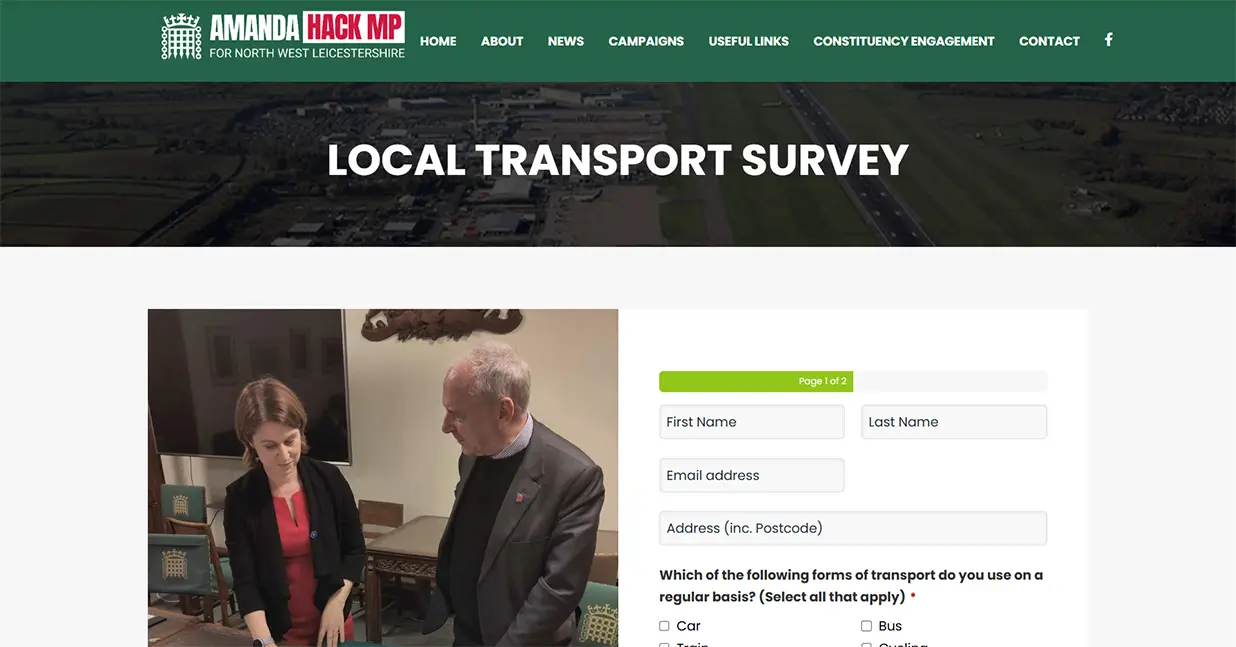
Amanda Hack MP integrating a transport survey onto her website.
Focus on identification, not commitment: The goal at this stage is not to push people further than they are comfortable going. It is to identify who they are, understand what brought them to your campaign, and make future follow-up possible. The more opportunities you give people to raise their hand in small ways, the larger and stronger your contact universe becomes.
6. Offer Diverse Ways to Take Action
Not everyone will donate, and not everyone will knock doors. But most constituents are willing to help in at least one way if you make it easy and accessible. A strong campaign website recognises that people have different skills, time, and comfort levels, and offers options that reflect that reality.
Meet supporters where they are: Someone who is nervous about door knocking might be great at phone banking. Someone who cannot give money might be willing to share campaign content online. Someone short on time might still request a garden sign or talk to friends and neighbours. The goal is not to push everyone into the same activity, but to make sure there is a meaningful way for anyone who wants to help to do so. Your website should actively equip supporters to act on your behalf. The easier you make it to help, the more constituents will. Useful resources might include:
Pre-designed social media content: Shareable graphics and pre-written posts supporters can easily grab and post to their own social media.
Downloadable resources: Factsheets on your positions, one-pagers on local issues, printable flyers or leaflets, etc.
Messaging-ready content: Short text and images designed for WhatsApp and other messaging apps.
Requests for garden signs and posters: Garden or window signs supporters can request for local delivery by the campaign
7. Use Targeted Pages to Support Outreach
Every campaign website needs a small set of clear, browsable core pages. Targeted pages are an additional tool for maximising your website, not a replacement for the basics. They are the pages you link to from leaflets, QR codes, emails, social media posts, etc., rather than always sending everyone back to your homepage. They work best when they are built for specific audiences or moments and used as destinations in targeted outreach, rather than relying on people to find them by chance. Their value comes from sending the right people to the right page at the right time. Used well, these pages support segmentation, sharpen your message, and make outreach through other channels more effective.
Audience-specific pages: Create dedicated pages for key groups in your constituency, such as students, renters, parents, small business owners, or trade union members. Each page should focus on the issues that matter most to that group and use clear, direct language. For example, a leaflet aimed at trade union members might link directly to a page setting out your record and priorities on workers’ rights, while canvassing in student housing can point people to a page focused on tuition fees and housing costs.
Rapid response pages: When something happens, your website should be able to respond quickly. A postal vote launch, a major endorsement, or a local issue gaining attention online are all opportunities to create a simple landing page and drive traffic there. These pages should be quick to build, single-purpose, and designed to match the moment that prompted the click.
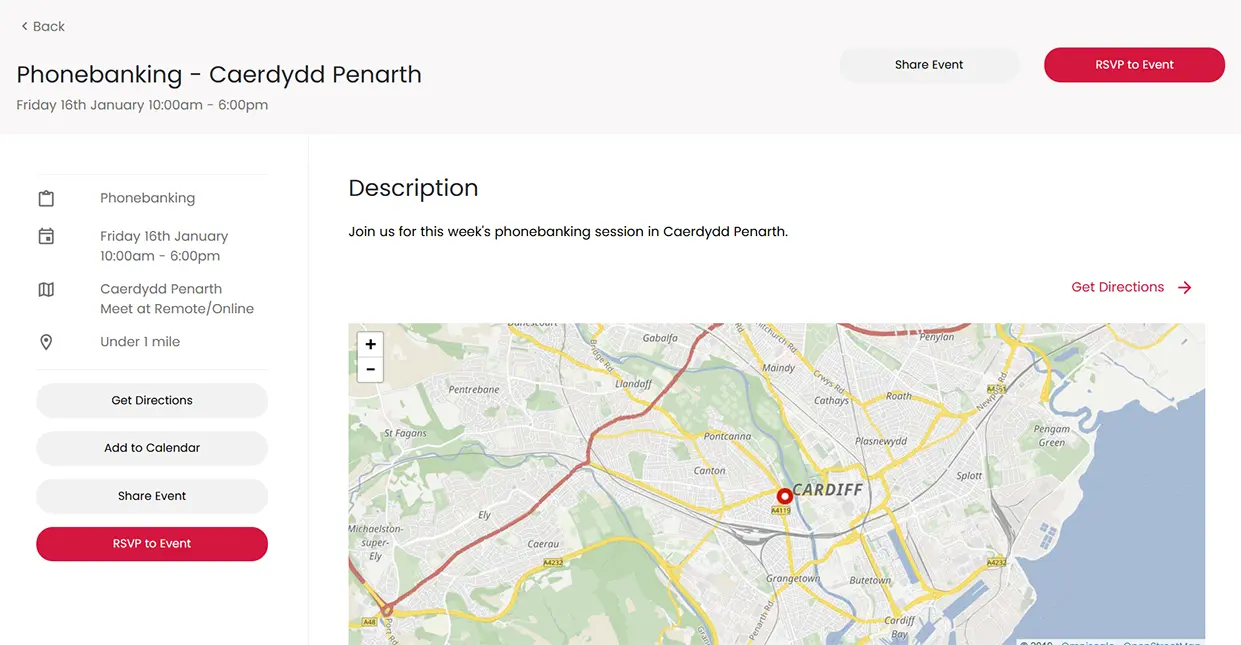
Event-specific pages: Most campaigns will still have a general “Events” page, and that is fine day-to-day, but for larger events or moments where you are actively trying to drive attendance, create a dedicated page for the event and link to it directly from emails, texts, or social media posts. Include only what people need to attend, such as the purpose of the event, time, location, and a simple RSVP form.
A phonebanking event with its own webpage.
8. Integrate with Your Broader Digital Strategy
Your website should not exist in isolation. It is the hub that connects and strengthens all your other digital activity, from emails and texts to social media and advertising. When everything points back to your website in a clear, intentional way, each channel becomes more effective and easier to manage.
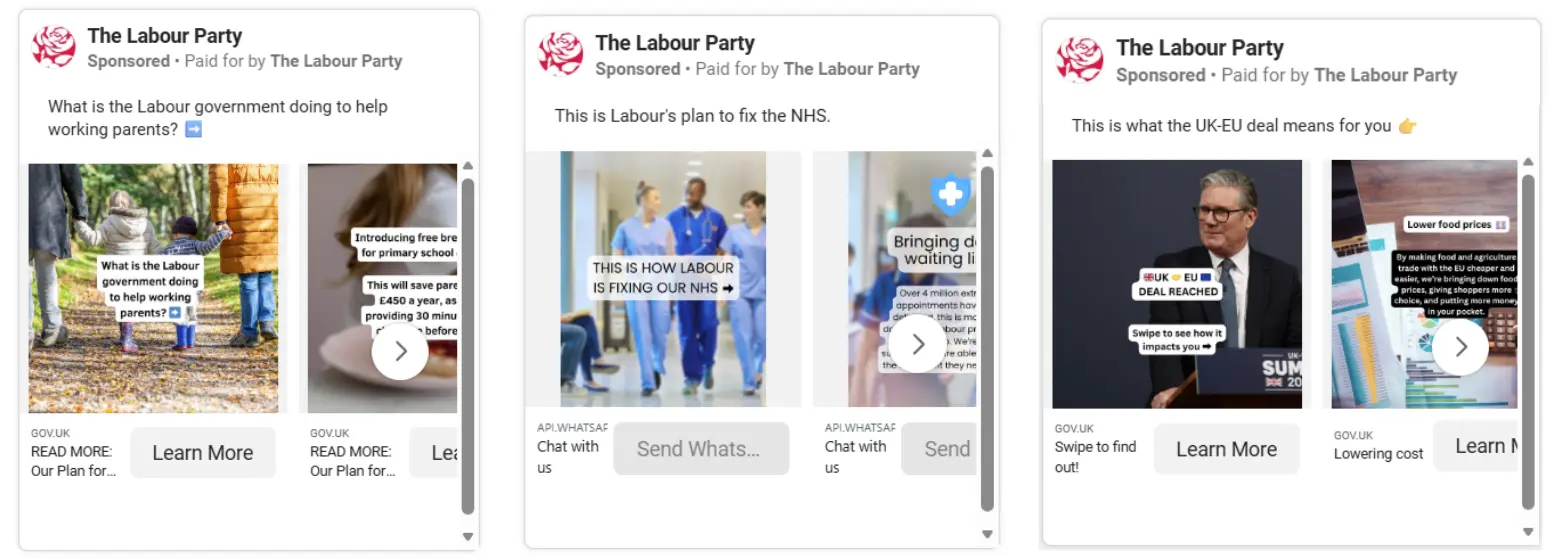
Link strategically across all channels: Every email, text, social post, and advert should drive voters to a specific page on your website, not just the homepage. Running Facebook ads about the NHS? Send constituents directly to your NHS policy page. Promoting an event on social media? Link to the event page with full details and an RSVP. The more specific the link, the more likely people are to engage, whether that means clicking, sharing, attending an event, or signing a petition.
The Labour Party linking to website pages in their Meta ads.
Repurpose website content everywhere: Your website should act as a single source of truth for your campaign’s messaging. That blog post about local schools can become email content, social media graphics, door-knocking talking points, and FAQs for volunteers. When your website content feeds all your other communications, your message stays consistent and your team saves time.
Let data improve everything: Pay attention to which pages get the most visits and which links people click in emails and posts. If your housing page is consistently attracting traffic, talk more about housing. Your website and social media analytics show you what voters are actually engaging with, helping you refine your message across every channel. (See the “Track Everything” section for how to use this data for more sophisticated targeting.)
9. Track Everything (Even the Boring Stuff)
The data you capture about how voters find you and what they do on your website can be more valuable than what they type into a form. Set up website tracking early, even if you do not use it immediately. This is what allows you to make smarter decisions about both outreach and advertising, and avoid wasting time or money later in the campaign. All of this can feel like admin work, but it pays off when you can see exactly what is working, what is not, and how to focus your outreach and advertising on the voters most likely to respond.
Track website behavior for smarter targeting: Constituents who visit your issues page should receive different follow-up from those who donate immediately. Someone who spends five minutes reading about your housing policy is telling you something about what they care about. Use these signals to shape more targeted and relevant outreach.
Hidden fields capture context: Use hidden fields in your forms to record which page someone signed up from, which campaign or link brought them there, or which ad they clicked. This happens automatically in the background, but it gives you valuable context for follow-up.
UTM parameters show what’s working: UTM parameters are short tracking codes added to links that tell you where website traffic is coming from. Tag links in emails, social posts, digital ads, and QR codes on printed materials so you can see which channels and messages are driving visits and conversions.
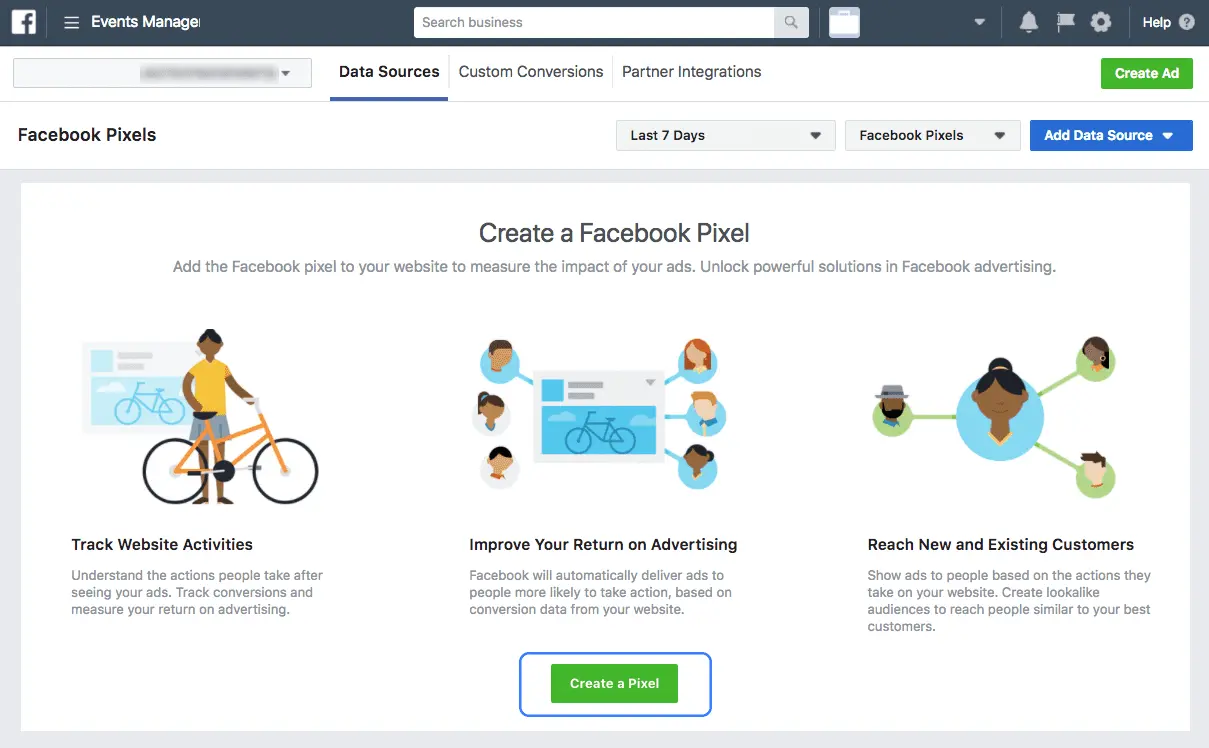
Tracking pixels enables advertising: Set up tools like the Facebook pixel, Google Analytics, and any other ad platform tracking you are using. This allows you to retarget people who have already engaged with your site and build lookalike audiences based on voters who care about specific issues, making your advertising spend far more efficient.
Facebook Pixel for tracking website visits and conversions.
10. Plan for What Happens Next
A campaign website is inherently temporary, but the relationships you build through it do not have to be. Thinking about what comes next before election day helps you maintain momentum, retain supporters, and transition smoothly into the next phase, whatever the outcome.
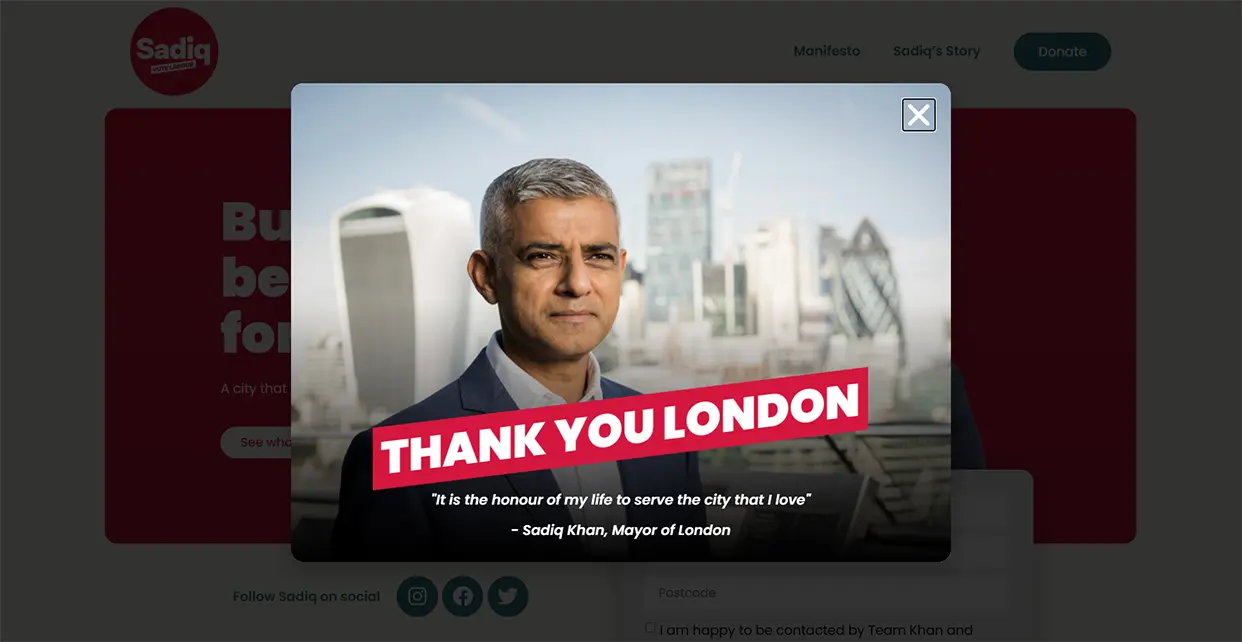
Use transition messaging immediately after election night: In the period between election night and being formally sworn in, your website should reflect that you’re in transition. This can be as simple as updating the campaign site or adding a temporary transition page that thanks supporters, acknowledges the result, and sets out what happens next. Used well, this signals momentum and reassures people that the campaign is moving into delivery, not going quiet.
Sadiq Khan using a popup to thank voters after the election.
Example: After being re-elected Mayor of London in May 2024, Sadiq Khan updated his campaign website with a prominent “Thank You London” popup. The message acknowledged supporters immediately after election night and clearly signalled a shift from campaigning to governing.
Plan the shift to an elected member website: Once you are sworn in, your digital presence needs to change fundamentally. A campaign site is no longer fit for purpose. Elected members need a website focused on constituent service, with clear contact details, casework request forms, surgery information, and updates on council or parliamentary work. Some representatives do this by substantially changing their existing site, while others move to a new domain altogether. Either way, this shift should be planned in advance so it can happen quickly and cleanly.
Don’t let domains expire: Campaign websites do not need to stay live forever, but domains should be retained where possible. Old campaign domains can be redirected to an elected member site, archived, or reused in future campaigns. Letting a domain lapse risks confusion, impersonation, or the loss of a valuable digital asset.
Why This Matters
With the May 2026 local elections approaching, the competition for attention online is increasing. Labour campaigns are up against well-funded opposition and a growing Reform UK presence in many wards. Campaign websites play a central role in how people encounter campaigns, how messages land, and whether interest turns into action.
Used effectively, a website becomes the hub that links leafleting, canvassing, email, social media, and events. It gives campaigns a single, reliable place to explain local priorities, capture supporter details, promote activity, and direct people toward meaningful ways to get involved.
The approaches outlined here focus on using digital tools to strengthen what Labour campaigns already do well: organising locally, building relationships, and delivering for communities. A strong website makes every other campaign activity more effective by providing clear landing points and simple next steps. Campaigns that invest in this now will be better positioned to win in May 2026 and build durable infrastructure for future elections.
Support for Campaigns
If you want to talk through how any of these ideas could work for your campaign website, we’re always happy to chat. Get in touch to discuss practical next steps, from quick improvements to longer-term digital planning.
Nitesh Patel has built digital tools for Labour politicians since 2008, supporting councillors, MPs, Welsh MSs and first-time candidates across the UK. He combines technical expertise with grassroots organising experience to create fast, practical campaign websites that help candidates connect with voters and compete effectively.
Kelsey Lewis has worked at the intersection of democracy and design across the UK and internationally, supporting governments and civil society on complex political issues. She brings that experience to Labour campaigns, creating clear, confident brands and campaign assets that help candidates communicate their values and connect with voters.
500+ Graphics Templates
Used by 2,000+ Labour members and groups nationally, get instant access to 500+ graphic templates that convert voters into supporters.
“I can’t recommend Labour Templates enough. The customer service is incredible – they are always available day and night and nothing is ever too much trouble. They offer a full service of digital support and the quality is second to none. I would be lost without them.”
Andrew Ranger MP
Wrexham
“The support from Nitesh Patel (Director) and the team at Labour Templates has been excellent from the outset. They are responsive, offer options and the training videos have been very useful in terms of supporting day to day running of the website.”
Gregor Poynton MP
Livingston
“Would recommend Nitesh Patel (Director), Labour Templates and ePolitixDesign to all candidates and campaigners. The work is all first rate and exactly what you need to run a successful campaign.”
Marc Wickens
Basingstoke Labour
"Their approach is to be as supportive as you need. Nitesh (Director) was always on hand to help for those areas I wasn't able to do myself. The whole process was smooth, and the website looks fantastic. Highly recommended!”
Hersh Thaker
Labour Indians
“Nitesh Patel [Director, Labour Templates] and his team are simply brilliant…For those looking to set up a website for themselves or a group – you will genuinely get everything you need with Labour Templates and much more. High recommended.”
Cllr Lenny Rolles
Weald of Kent Labour
“Labour Templates are absolutely fantastic. They couldn’t have been more helpful in producing a website that looks professional. The response has been brilliant and the ongoing service and advice invaluable. If you are looking for help and support I would stop your search and use Labour Templates.”
Andy Blackaby-Iles
Aylesbury Labour
“Quick, easy, and the website looks a million times better. The customer service from Nitesh Patel [Director, Labour Templates] is on another level to any other service I’ve used and I’m thrilled with the end result and the ongoing support.”
Cllr Chris Cornell
Canterbury Labour
“The team have been at the heart of our success. Their skill, dedication and desire to understand who and what we are has been key to us being able to appear modern, engaging and proactive in sharing our messages. We’ve gone from having three councillors to over 18 and forming an administration.”
Cllr Ciaran Cronnelly
Weston super mare
“The functionality and design of the website is great and the support on offer from Nitesh Patel [Director, Labour Templates] has been invaluable.”