Connecting with Voters Through Email Content
By Nitesh Patel and Kelsey Lewis
- Published:
Email remains one of the most powerful direct communication channels in modern politics, and for UK Labour campaigns and members in particular, it’s an opportunity to build trust, share Labour values, and turn supporters into active participants.
Sending emails isn’t just about hitting “send.” It’s about purposeful communication: knowing why you’re sending something, who you’re speaking to, and what you want them to do next.
In this article, we’ll help you write emails that resonate with your audience, whether you’re mobilising a campaign, inspiring volunteers, or keeping constituents informed and engaged.
Campaign Emails: Purpose, Audience, Action
Campaign emails exist to move people to action: to donate, volunteer, attend events, or vote. Every email should have a clear purpose, and ideally a clear action. Effective campaign emails are not one-size-fits-all. Different audiences should receive different messages depending on where they are in the supporter journey. The strongest Labour campaigns segment their lists and tailor content accordingly — from core supporters to undecided voters and those identified as likely to turn out.
At a minimum, campaign email content should be shaped by:
- Level of support (strong supporter, leaning, undecided)
- Past behaviour (donated before, volunteered, voted previously)
- Location (ward, constituency, target areas)
- Engagement (opens and clicks)
This doesn’t need to be complicated. Even light segmentation allows you to write emails that feel more relevant, and relevance is what drives action. Below are some of the most common campaign audiences and how content could differ for each.
🚨 Pro Tip: Campaign emails don’t need fancy design, just predictable branding and clear attribution to your campaign. When someone opens the email, they should immediately recognise who it’s from. Campaign emails are usually short and direct, and too many images or design elements can distract from the message. Simpler emails tend to work better. Let your words do the heavy lifting.
Emails to Labour Supporters: Mobilise
For people who already support you, email is about mobilisation. These are the voters who’ve already signalled alignment with Labour values and goals, and they are the most likely to donate, volunteer, attend events, or help spread your message.
Because they’re already on your side, these emails can be more direct. Supporters respond well to clarity, urgency, and a sense of shared momentum. They don’t need persuading why you matter (they already agree!), but they do need to know how they can help and why now.
Typical supporter emails include:
- Fundraising appeals;
- Volunteer requests;
- Event invitations;
- GOTV reminders.
Example: Supporter Mobilisation Email
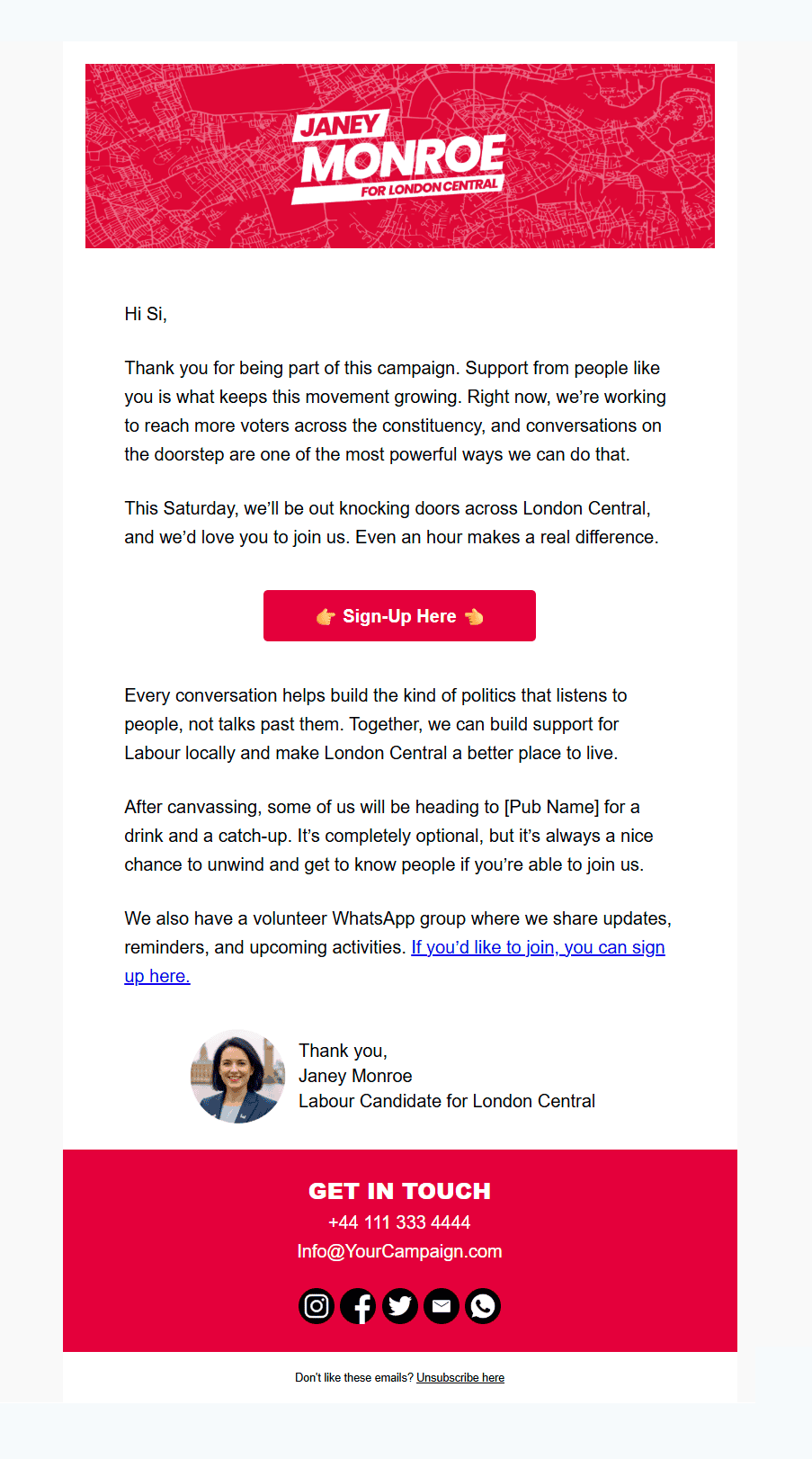
✍️ Note: The examples throughout this article are available as templates in Labour Mail. Names, scenarios and roles are fictional and are provided for illustrative purposes only.
Emails to Leaning or Undecided Voters: Inform, Don’t Pressure
For voters who aren’t fully committed, email plays a different role. Here, the goal is not to push for immediate action, but to build credibility, demonstrate values, and show local relevance. The tone should be informative rather than pushy; you are slowly trying to persuade them for your vote. These readers are more likely to engage with emails that explain why you’re standing, what Labour is offering locally, and how their concerns are being heard.
Typical content types
- Issue-focused messages;
- Candidate introductions;
- Local priorities and plans;
- Invitations for dialogue and learning more.
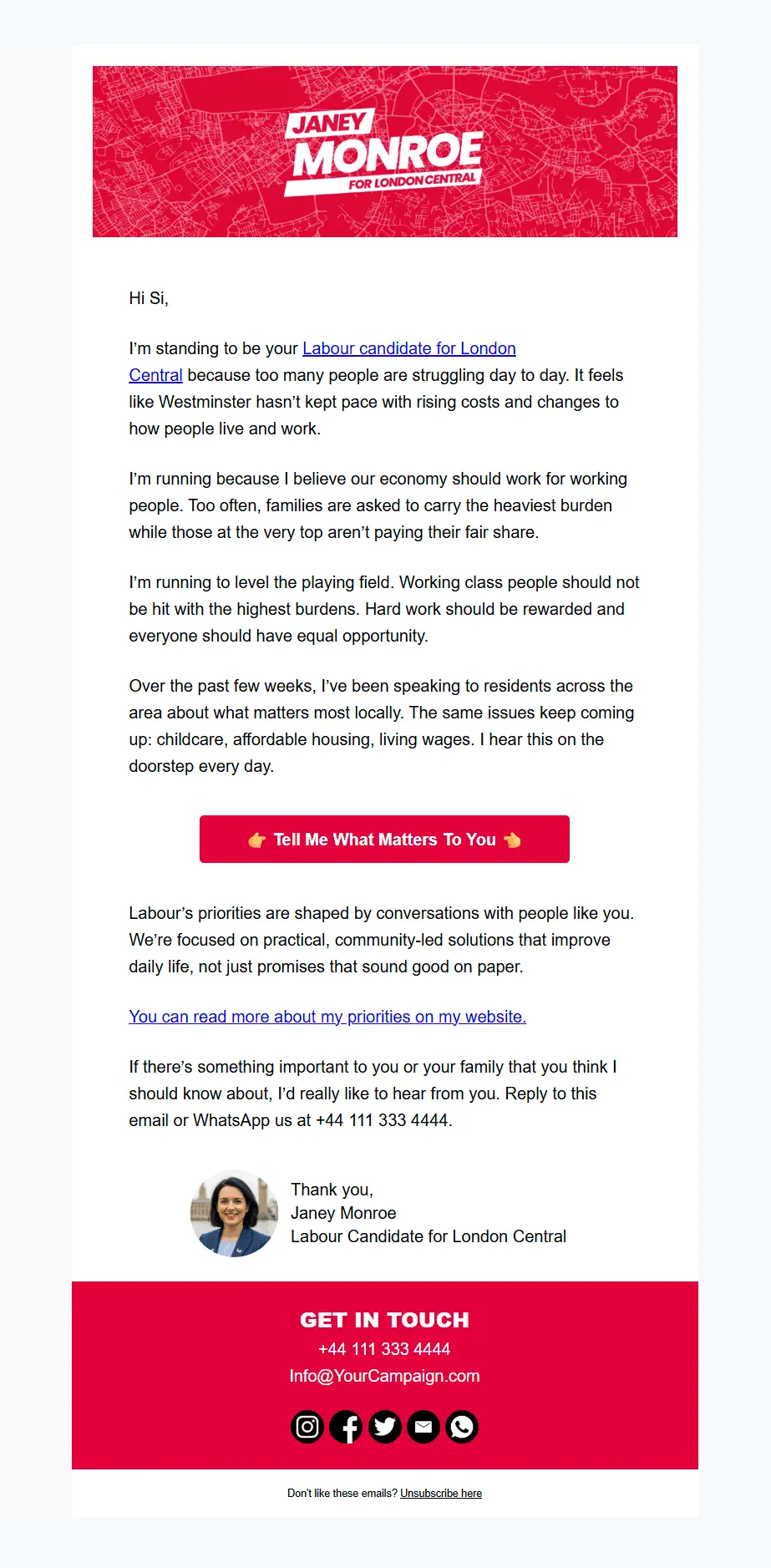
Example: Undecided Persuasion-Focused Email
GOTV and Election-Period Emails
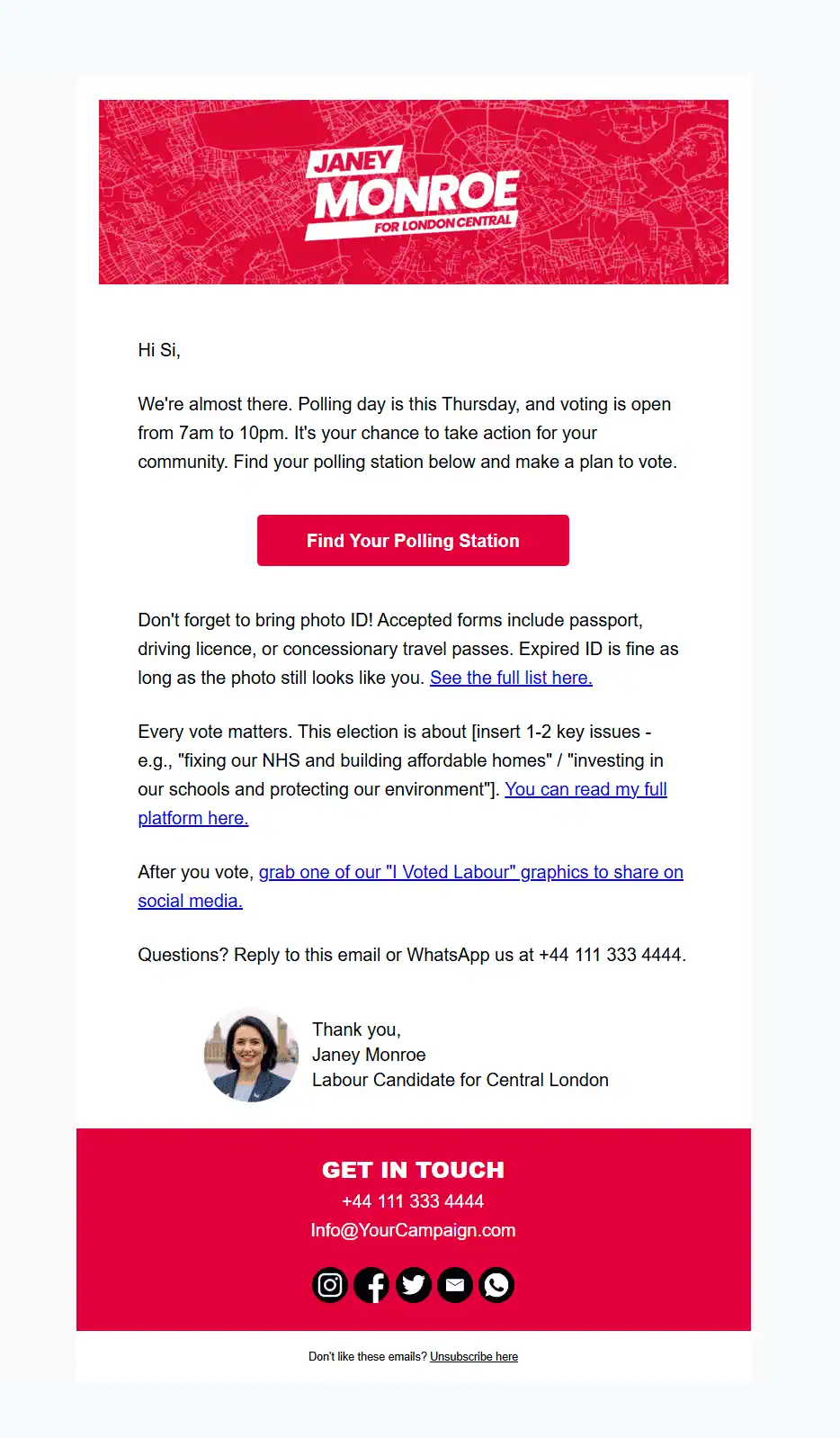
As polling day approaches, the role of email narrows. This is no longer the time for long explanations or persuasion. The goal is to make voting as easy, clear, and unavoidable as possible. Good GOTV emails focus on logistics and reassurance. They repeat key information, remove uncertainty, and gently reinforce the importance of turning out without overwhelming the reader.
Typical GOTV emails include:
- Polling day reminders;
- Early or postal voting information;
- “Don’t forget to vote” messages;
- Final encouragement emails.
Example: GOTV Reminder Email
Elected Representative Emails: Inform, Reassure, and Build Trust
Once elected, the role of email changes. Your core email content shifts from action-first to relationship-first. The goal is no longer persuasion, it’s accountability, visibility, and service. Constituents want to know what you’re doing, what’s changing locally, how decisions affect them, and how to get help if they need it. A good email programme builds trust over time and helps people feel represented, even if they don’t always agree with you.
Constituency Newsletters: Consistent and Useful
Most elected representatives benefit from a regular, predictable email (weekly or monthly) that people come to recognise. These newsletters work best when they’re clear, easy to scan, and focused on local impact.
A strong constituency newsletter usually includes:
- What you’ve been working on;
- Local updates and wins;
- Upcoming meetings or surgeries;
- Useful information or deadlines.
Pro Tip: Constituency newsletters need more design than campaign emails, simply because they’re carrying more information. The design isn’t there to distract, it’s there to make the email easier to read. In longer emails, photos and visuals can help break up text, and clear, distinct sections make it easier for readers to find what they’re looking for. In practice, your office should build the newsletter template once and then reuse it week to week or month to month.
Example: Elected Member Newsletter

Rapid Response and Timely Updates
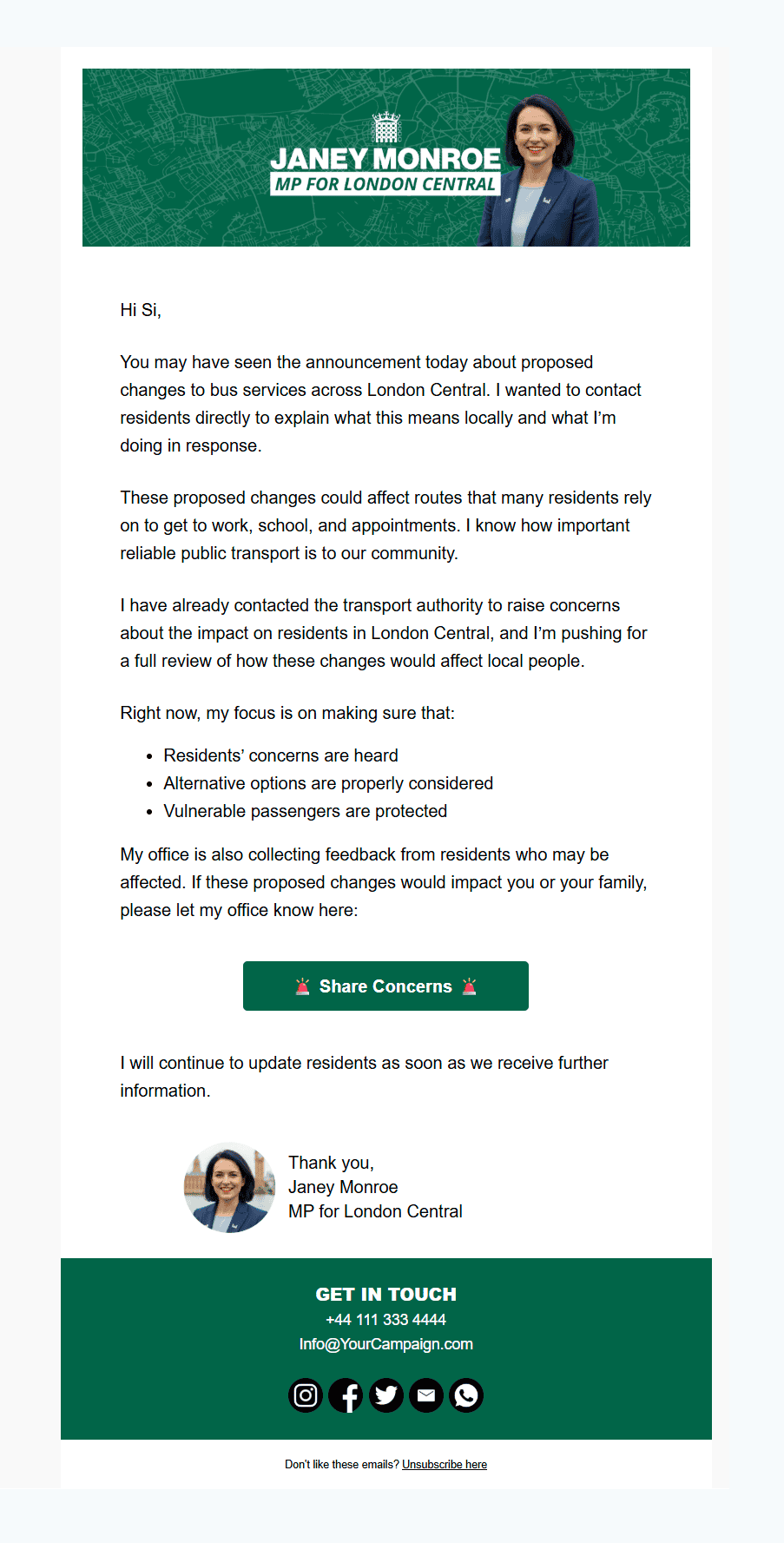
Not all emails need to be part of a regular newsletter. Sometimes an issue or event demands a quick, clear update. These ad-hoc emails help demonstrate leadership, provide clarity during uncertainty, and reassure constituents. They are particularly effective when there’s confusion, concern, or misinformation circulating locally.
Typical rapid-response emails include:
- Responses to major announcements;
- Updates during local incidents;
- Changes to services or policy;
- Statements on key votes.
Example: Rapid Response Email
Practical Principles for Better Political Emails
Regardless of whether you’re campaigning or in office, strong political emails tend to share a few things in common:
- One clear purpose per email
- Short paragraphs and plain language
- Consistency in tone and timing
- Relevance to the reader
- Mobile-friendly formatting
Email works best when it feels human, purposeful and respectful of people’s time.
We’re Here to Help
Labour Mail is our all-in-one email platform built specifically for Labour campaigns and elected representatives. Unlike commercial marketing tools, it’s designed for political work by people who’ve run campaigns, with an understanding of election cycles, list churn, and limited time and resources.
It integrates directly with your wider campaign infrastructure, so emails collected online, at events, or on the doorstep all land in one place. Pricing scales with list size, and the platform is eligible for use with IPSA funding.
We also support teams with strategy and delivery, from drafting emails and creating templates to setting up systems that make it easier to send the right message to the right people.
If you want support turning this guidance into emails you can send, we’re here to help.
- branding, candidates, elections, email marketing, labour party, strategies
About the Authors

Nitesh Patel has built digital tools for Labour politicians since 2008, supporting councillors, MPs, Welsh MSs and first-time candidates across the UK. He combines technical expertise with grassroots organising experience to create fast, practical campaign websites that help candidates connect with voters and compete effectively.

Kelsey Lewis has worked at the intersection of democracy and design across the UK and internationally, supporting governments and civil society on complex political issues. She brings that experience to Labour campaigns, creating clear, confident brands and campaign assets that help candidates communicate their values and connect with voters.
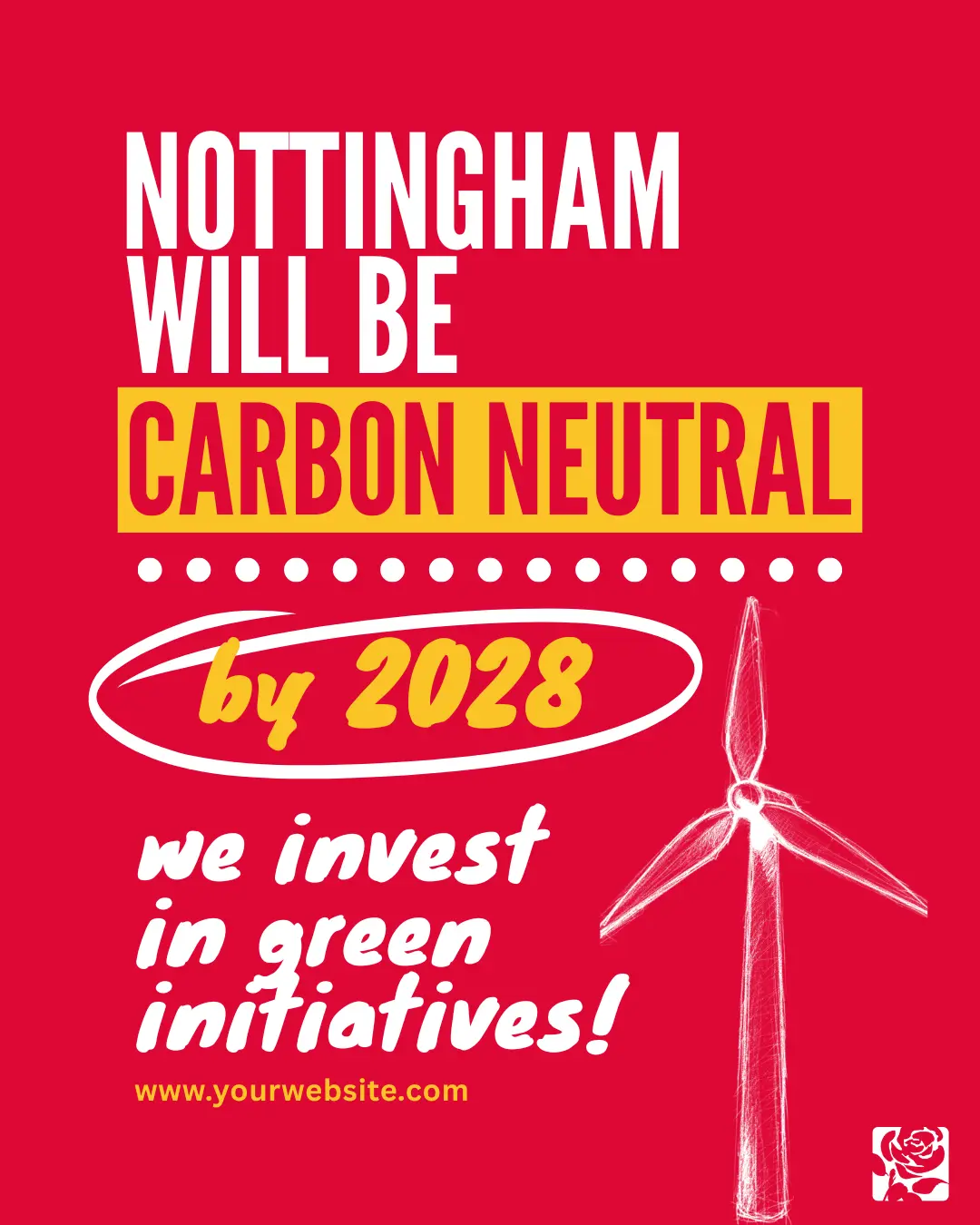
500+ Graphics Templates
Used by 2,000+ Labour members and groups nationally, get instant access to 500+ graphic templates that convert voters into supporters.


Trusted By Campaigns
Jon Pearce MP
“I can’t recommend Labour Templates enough. The customer service is incredible – they are always available day and night and nothing is ever too much trouble. They offer a full service of digital support and the quality is second to none. I would be lost without them.”

Andrew Ranger MP
“The support from Nitesh Patel (Director) and the team at Labour Templates has been excellent from the outset. They are responsive, offer options and the training videos have been very useful in terms of supporting day to day running of the website.”

Gregor Poynton MP
“Would recommend Nitesh Patel (Director), Labour Templates and ePolitixDesign to all candidates and campaigners. The work is all first rate and exactly what you need to run a successful campaign.”

Marc Wickens
"Their approach is to be as supportive as you need. Nitesh (Director) was always on hand to help for those areas I wasn't able to do myself. The whole process was smooth, and the website looks fantastic. Highly recommended!”

Hersh Thaker
“Nitesh Patel [Director, Labour Templates] and his team are simply brilliant…For those looking to set up a website for themselves or a group – you will genuinely get everything you need with Labour Templates and much more. High recommended.”

Cllr Lenny Rolles
“Labour Templates are absolutely fantastic. They couldn’t have been more helpful in producing a website that looks professional. The response has been brilliant and the ongoing service and advice invaluable. If you are looking for help and support I would stop your search and use Labour Templates.”

Andy Blackaby-Iles
“Quick, easy, and the website looks a million times better. The customer service from Nitesh Patel [Director, Labour Templates] is on another level to any other service I’ve used and I’m thrilled with the end result and the ongoing support.”

Cllr Chris Cornell
“The team have been at the heart of our success. Their skill, dedication and desire to understand who and what we are has been key to us being able to appear modern, engaging and proactive in sharing our messages. We’ve gone from having three councillors to over 18 and forming an administration.”

Cllr Ciaran Cronnelly
“The functionality and design of the website is great and the support on offer from Nitesh Patel [Director, Labour Templates] has been invaluable.”